
 Available in US
- Straight Bets: The Foundation of Horse Racing Wagering
- Exacta Bets: Picking the Top Two in Order
- Trifecta Bets: Three-Horse Precision
- Superfecta Bets: High Risk, High Reward
- Multi-Race Wagers: Chaining Together Across the Card
- Quinella and Super Hi-Five: Specialty Exotics
- Which Bet Type Is Right for You?
- Conclusion
Walk up to a horse racing betting window for the first time, and you will encounter a menu of wagering options that seems designed to confuse newcomers. Win, place, show, exacta, trifecta, superfecta, pick three, pick six — the terminology alone can feel overwhelming before you even consider which horses to back. The good news is that every bet type follows logical principles, and mastering them opens up a world of strategic possibilities.
Horse racing offers more betting variety than almost any other sport. You can keep things simple with straight win bets or construct elaborate multi-race wagers that chain together across an entire afternoon card. The flexibility allows bettors to match their risk tolerance, bankroll size, and handicapping confidence to specific wagering strategies. A beginner can start with two-dollar show bets while a seasoned player builds intricate pick six tickets covering dozens of combinations.
This guide walks through every major bet type you will encounter at American racetracks and online platforms. We will start with the foundational straight wagers that every bettor should understand, then progress through single-race exotics and finally explore the multi-race bets that produce some of the sport’s most spectacular payouts. By the end, you will know exactly what to say when the teller asks for your wager.
Straight Bets: The Foundation of Horse Racing Wagering
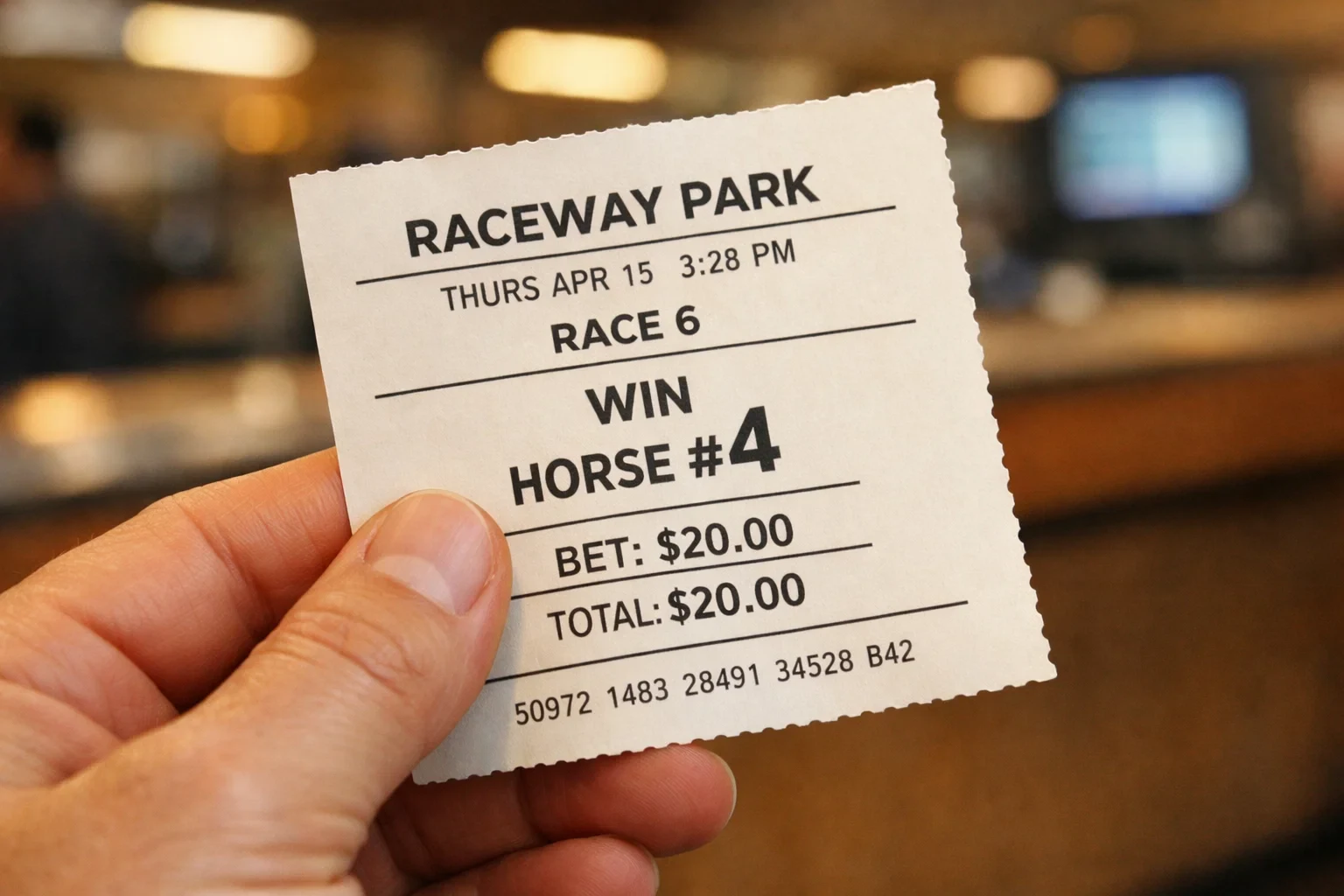
Straight bets represent the simplest and most accessible form of horse racing wagering. These bets involve selecting a single horse and predicting where it will finish. No complicated combinations, no need to identify multiple runners in exact order — just pick your horse and root for the desired result. Every beginner should start here before venturing into exotic territory.
Win Bets: The Purest Form of Horse Racing Gambling
A win bet is exactly what it sounds like. You select a horse, place your money, and collect if that horse finishes first. Nothing else matters. Second place pays nothing on a win bet. Your horse either crosses the wire ahead of everyone else, or your ticket becomes worthless. This binary outcome makes win betting the most straightforward proposition at the track.
Win bets also tend to offer the best value for skilled handicappers. The takeout rate on win pools typically runs between fifteen and seventeen percent, lower than most exotic wagers. When you have strong conviction about a particular horse’s chances, concentrating your money in the win pool maximizes your potential return relative to the house edge.
The simplicity of win betting forces you to develop genuine handicapping skills. You cannot hide behind complicated ticket structures or hope that boxing enough horses will produce a winning combination. Either your analysis correctly identified the best horse in the race, or it did not. This accountability makes win betting an excellent training ground for developing the judgment needed for more complex wagers.
Place Bets: Expanding Your Margin for Error
Place bets give you two ways to cash. Your horse can finish first or second, and you win either way. This expanded target naturally comes with reduced payouts — you sacrifice potential profit for a higher probability of collecting. Place bets suit situations where you like a horse’s chances of hitting the board but feel less confident about its ability to win outright.
The place pool divides among bettors who selected either the first or second finisher. Your payout depends not only on your horse’s final odds but also on how much money was bet on the other horse that finished in the top two. A place bet on a longshot can produce a surprisingly modest return if the favorite finishes alongside it, because all the money backing the favorite must be paid from the same pool.
Place betting works well for horses you believe are better than their odds suggest but face a dominant favorite. Rather than trying to beat a horse that seems virtually certain to win, you bet your selection to run second and still collect a meaningful return. This strategic approach acknowledges reality while positioning you to profit from your accurate assessment.
Show Bets: Maximum Safety, Minimum Reward
Show bets offer the widest safety net in horse racing. Your horse can finish first, second, or third, and you collect. In a typical field of eight to twelve runners, backing a contender to show means you need your horse to beat roughly two-thirds of the field — far easier than predicting an outright winner.
The tradeoff is obvious. Show payouts are small, sometimes barely exceeding your original wager on heavy favorites. A show bet on a 1/5 favorite might return only two dollars and twenty cents on a two-dollar bet. You waited around for an entire race, cheered your horse into the money, and earned a dime above your investment. For this reason, show betting on favorites rarely makes strategic sense.
Show bets find better application with horses at longer odds. A 6/1 shot in the show pool might return four dollars or more on a two-dollar bet — a more acceptable return for the time invested. Some recreational bettors enjoy show parlays, rolling their returns from one race into show bets on subsequent races, building modest bankrolls through accumulated small wins.
Across the Board: The Triple Threat
An across the board bet places three separate wagers on one horse: win, place, and show. If your horse wins, you collect all three payouts. If it finishes second, you collect place and show. If it finishes third, you collect only show. This combination costs three times your base wager — a two-dollar across the board bet costs six dollars total.
Across the board betting appeals to fans who want maximum action on a single horse without the complexity of exotic wagers. You collect something whether your horse finishes first, second, or third, which softens the blow of narrow defeats. The emotional cushion has value for those who find losing by a nose particularly painful.
Mathematically, across the board bets rarely offer optimal value. If you genuinely believe a horse will win, concentrating all six dollars in the win pool produces a larger return than splitting it three ways. The across the board structure dilutes your strongest conviction into weaker positions. Serious handicappers generally avoid this bet type, preferring to put their money where their assessment is most confident.
Exacta Bets: Picking the Top Two in Order
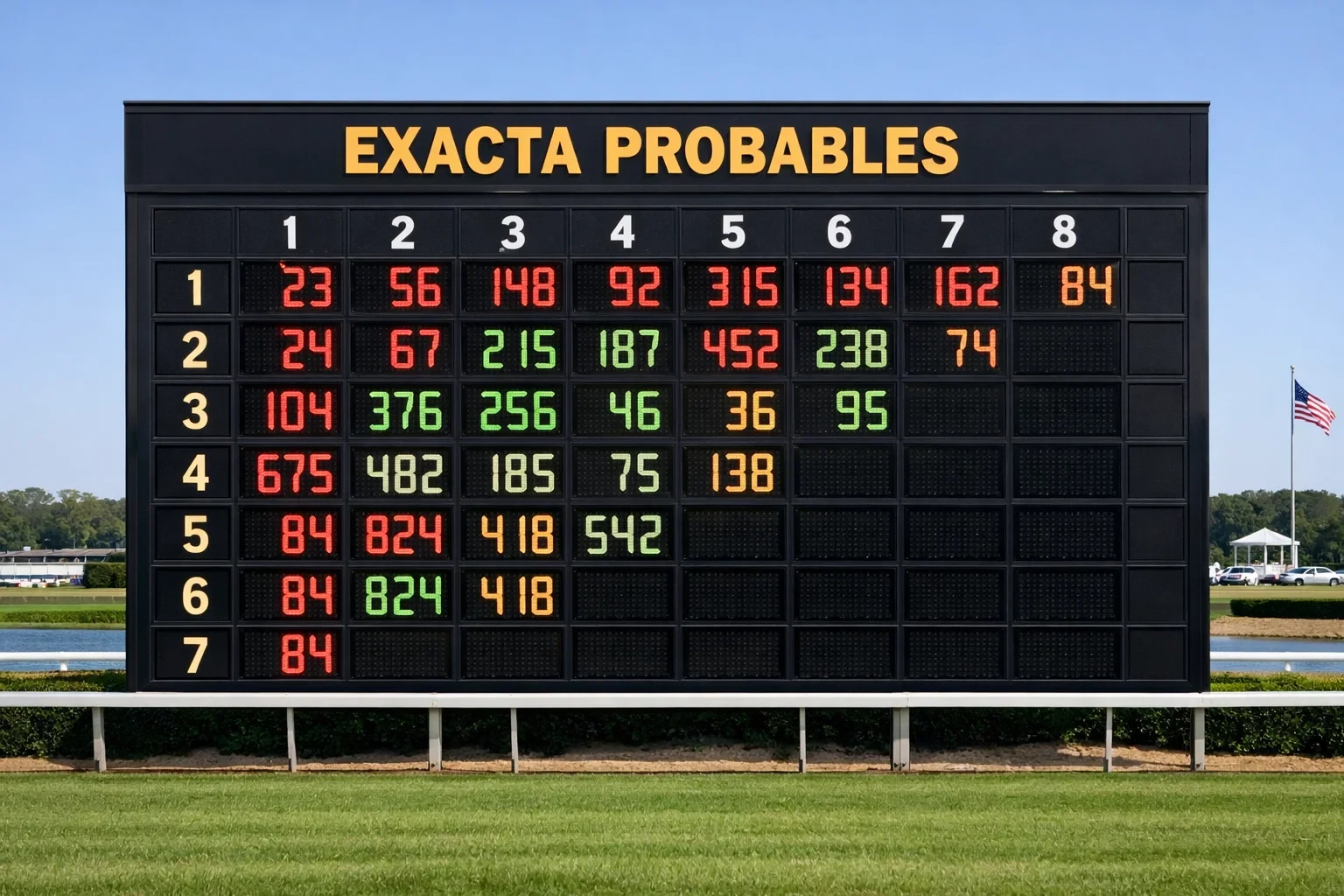
Exacta betting moves into exotic territory by requiring you to select both the first and second-place finishers in exact order. This additional requirement dramatically increases difficulty compared to straight bets but also produces significantly larger payouts when successful. Exactas represent the entry point into multi-horse exotic wagering.
Straight Exacta: The Precision Play
A straight exacta ticket names two horses and predicts that Horse A will finish first and Horse B will finish second. If they finish in reverse order, you lose. If either horse fails to hit the board entirely, you lose. The specificity of this prediction explains why exacta payouts routinely exceed what either horse would pay individually in the win or place pools.
Straight exactas reward bettors who can identify not just contenders but the likely hierarchy among them. Finding two horses with winning potential is only part of the challenge. You must also determine which one has the better chance of actually winning and which projects as a strong second-place candidate. This layered analysis separates successful exacta bettors from those who randomly pair up horses they like.
Exacta Box: Covering Both Orders
Boxing an exacta eliminates the need to specify order. An exacta box covering Horse A and Horse B wins if those two horses finish first and second in either combination — A first and B second, or B first and A second. This flexibility costs exactly double a straight exacta because you are essentially buying two tickets.
Many bettors overuse exacta boxes, failing to recognize that boxing two horses means you believe they have roughly equal chances of winning. If you think Horse A is clearly superior to Horse B but both should hit the board, a straight exacta makes more sense than paying extra to cover the reverse order you consider unlikely. Boxes work best when you genuinely cannot separate two horses in your analysis.
Exacta Wheel: One Horse with the Field
Wheeling creates exacta combinations pairing one key horse with multiple other runners. A first-half wheel puts your key horse on top (to win) with several horses underneath (to run second). A second-half wheel reverses this, using your key horse to run second behind various potential winners. Full wheels cover both positions.
Wheel strategies shine when you have strong confidence in one horse but less certainty about which other horse will join it in the top two. Rather than guessing which single horse will accompany your key runner, you spread across multiple possibilities. The cost increases with each horse added, but so does your probability of cashing.
Cost management becomes critical with wheels. A first-half wheel keying one horse over four others costs four times your base exacta wager. A full wheel with that same horse against four others costs eight times your base wager. Before committing to wheel strategies, calculate your total outlay and ensure the likely payouts justify the investment.
Trifecta Bets: Three-Horse Precision
Trifecta betting extends the exacta concept by requiring correct selection of the first three finishers in exact order. This exponentially increased difficulty produces some of the most attractive payouts in everyday horse racing. Trifectas regularly pay hundreds of dollars even in races with modest fields and reasonable favorites.
Straight Trifecta: Maximum Reward, Maximum Difficulty
A straight trifecta names three horses to finish first, second, and third in that precise order. Any deviation from your predicted sequence results in a losing ticket. The mathematical improbability of perfectly predicting three horses in exact finishing order explains why trifecta payouts dwarf those of simpler wagers.
Consider a ten-horse field. Straight exacta combinations total ninety possibilities (10 times 9). Straight trifecta combinations total seven hundred twenty (10 times 9 times 8). This massive increase in possible outcomes means the pool splits among far fewer correct tickets, producing larger individual payouts when you do hit.
Trifecta Box: Covering All Permutations
Boxing a trifecta covers every possible ordering of your selected horses. A three-horse trifecta box includes six combinations (ABC, ACB, BAC, BCA, CAB, CBA). A four-horse box covers twenty-four combinations. A five-horse box covers sixty combinations. Costs escalate rapidly as you add horses.
The trifecta box trade-off mirrors exacta boxing at a larger scale. You sacrifice potential profit for increased probability of cashing. A straight trifecta paying six hundred dollars becomes a one hundred dollar return when you boxed those three horses for six dollars total cost. Deciding when to box versus when to use more surgical ticket construction separates intermediate bettors from advanced players.
Trifecta Key Strategies: Finding the Middle Ground
Key horse strategies offer a middle path between expensive boxes and difficult straight bets. You designate one or more horses as “keys” that must finish in a specific position while allowing other horses to fill remaining spots in any order. This structure reduces cost compared to full boxes while still providing some flexibility.
A classic key strategy puts your strongest opinion on top — the horse you believe will win — then boxes several other horses for second and third. If you key Horse A to win and box horses B, C, and D for the minor placings, you cover six combinations instead of twenty-four for a four-horse box. Your cost drops seventy-five percent while maintaining coverage assuming Horse A wins.
More advanced key structures use multiple horses in different positions. You might key Horse A and Horse B to finish first or second in either order, with horses C, D, and E filling third place. These partial boxes and multi-key arrangements let you express nuanced opinions about the race while controlling costs.
Superfecta Bets: High Risk, High Reward
Superfecta betting pushes exotic wagering to its logical extreme by requiring correct selection of the first four finishers in exact order. The difficulty level rises dramatically from trifectas — in a twelve-horse field, possible straight superfecta combinations number nearly twelve thousand. This near-impossibility of precise prediction produces some of the largest payouts available in everyday horse racing.
Understanding Superfecta Mechanics
The superfecta pool typically carries a higher takeout rate than simpler bet types, often exceeding twenty percent. Tracks justify this steeper cut because superfecta payouts can reach life-changing levels, and bettors accept the terms for a chance at hitting big. The combination of extreme difficulty and elevated takeout makes superfectas particularly challenging from a mathematical value standpoint.
Superfectas produce memorable results when races unfold unpredictably. A modest ten-cent superfecta ticket can return thousands of dollars when longshots fill out the top four positions. Major stakes races occasionally see superfecta payouts exceeding one hundred thousand dollars when unlikely horses sweep the superfecta positions. These dramatic possibilities fuel continued interest despite the long odds.
Most racetracks offer ten-cent superfecta minimum wagers, recognizing that requiring two-dollar base bets would price out recreational players given the extensive combinations needed to have realistic chances. This reduced minimum allows bettors to spread across many combinations without astronomical investments. Even so, comprehensive superfecta coverage in a full field requires hundreds of combinations.
Boxing and Keying Superfectas
A straight four-horse superfecta box covers twenty-four combinations, costing two dollars and forty cents at a ten-cent base. Adding a fifth horse increases combinations to one hundred twenty, costing twelve dollars. A six-horse box covers three hundred sixty combinations at thirty-six dollars. The cost curve steepens rapidly, making judicious horse selection essential.
Key strategies become almost mandatory for serious superfecta play. Rather than boxing six horses and hoping for the best, experienced bettors structure tickets around their strongest opinions. Keying a single horse to win while boxing four others underneath covers just twenty-four combinations instead of one hundred twenty — same horses, eighty percent less cost, assuming your key horse wins.
Multi-position keys add sophistication. You might key two horses for the top two spots in either order, then spread across four horses for third and fourth. Or designate certain horses as usable only in specific positions based on your analysis — perhaps a horse with strong closing speed that projects to hit the board but likely cannot win against faster front-runners.
When Superfectas Make Sense
Superfecta betting suits specific situations better than others. Large fields with competitive horses and no clear dominant favorite create pools where the payout potential justifies the investment. Smaller fields or races with prohibitive favorites compress the odds and produce modest returns that may not compensate for the difficulty.
Races with significant pace questions often produce scrambled finishes that reward exotic bettors. When multiple speed horses figure to contest the early lead, exhausting each other while closers rally late, the finish order becomes unusually difficult to predict. These chaotic scenarios give longshots opportunities to fill out superfecta positions at generous prices.
Multi-Race Wagers: Chaining Together Across the Card
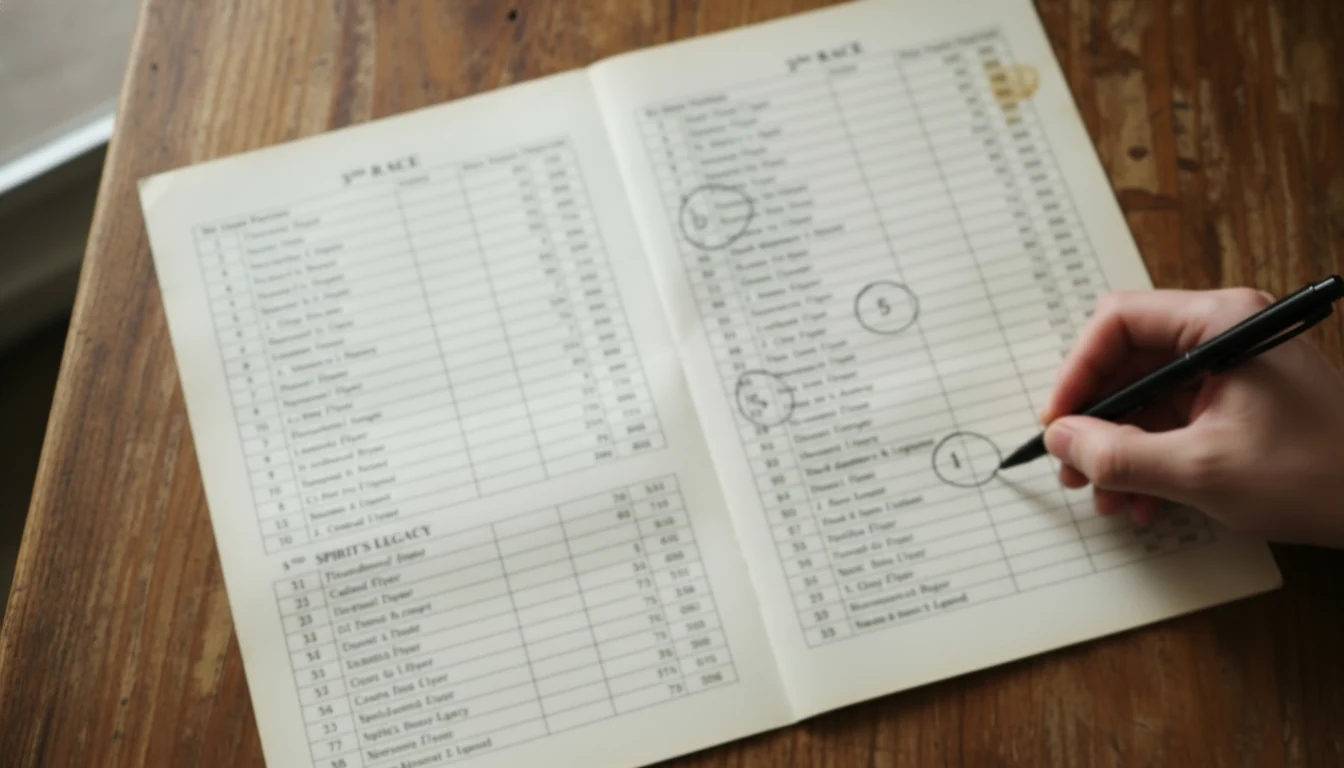
Multi-race wagers extend the exotic concept across multiple consecutive races, requiring correct winner selection in each leg to cash. These bets produce the largest regular payouts in horse racing — pick six jackpots occasionally reach millions of dollars — but demand correct analysis across several races simultaneously.
Daily Double: The Gateway Multi-Race Bet
The daily double requires selecting winners of two consecutive designated races, typically early on the card. It serves as an accessible introduction to multi-race betting without the complexity of longer sequences. Daily doubles appear at virtually every track and offer payouts that frequently exceed what either individual winner would pay alone.
Daily double strategy involves assessing both races together rather than as isolated events. You might single a strong favorite in one leg while spreading across several contenders in the other, or spread in both legs if neither race offers a confident selection. The cost multiplies based on how many horses you use in each leg — two horses in the first race combined with three in the second produces six combinations.
Correlating your picks across legs can add value. Perhaps a trainer has multiple starters on the card, and you expect one to wake up based on today’s conditions. Using that trainer’s horse in both legs of a daily double, if circumstances warrant, lets you benefit doubly from your opinion.
Pick Three, Pick Four, and Pick Five
These intermediate multi-race bets extend the daily double concept across additional legs. Pick three requires three consecutive winners, pick four requires four, and pick five requires five. Each additional leg exponentially increases difficulty while correspondingly inflating potential payouts.
Successful multi-race players think about tickets as investments requiring coverage decisions. In a pick four, you might single two races where you have strong opinions, use two horses in a third race, and spread across four horses in the most uncertain leg. This structure produces eight combinations — manageable cost while giving you multiple paths to a winning ticket.
The concept of using a race as a “spread” leg versus a “single” leg shapes ticket construction. Spread legs acknowledge uncertainty and provide coverage. Single legs express conviction and keep costs down. Getting this balance wrong — spreading where you should single, or singling where you should spread — often determines whether you cash or watch a winning ticket slip away.
Pick Six: The Ultimate Challenge
Pick six wagering represents the pinnacle of multi-race betting difficulty, requiring correct winner selection across six consecutive races. Many tracks structure pick six pools with carryover provisions — when no ticket correctly selects all six winners, the pool carries forward to the next racing day. These carryovers can build to substantial jackpots that attract significant attention.
Pick six strategy involves making difficult triage decisions. With six legs to cover, using even modest numbers of horses per race produces ticket costs that exceed most bankrolls. A ticket using just three horses per race contains seven hundred twenty-nine combinations, costing over seven hundred dollars at a one-dollar base. Serious pick six players must find races to single, accepting the risk of elimination in exchange for affordable ticket costs.
Consolation payouts for five-of-six correct provide some insurance against narrow misses. These payments typically represent a percentage of the pool allocated specifically for near-winners. While consolation amounts rarely match true pick six payouts, they soften the disappointment of coming close without hitting the jackpot.
Quinella and Super Hi-Five: Specialty Exotics
Quinella: Order Does Not Matter
A quinella requires selecting the first two finishers regardless of order. Unlike exactas, where sequence matters, quinellas pay the same whether your horses finish one-two or two-one. This simplified structure costs less than an exacta box because you are buying one combination instead of two.
Quinella availability varies by track and platform. Some racetracks offer quinella pools on most races, while others have eliminated them in favor of exactas. Where quinellas exist, comparing the quinella payout to the two possible exacta payouts helps determine which bet offers better value. Sometimes the quinella pays more than the cheaper of the two exactas, making it the superior choice.
Super Hi-Five: Five Horses in Order
The super hi-five extends exotic betting to the first five finishers in exact order. Even more difficult than superfectas, these bets rarely appear outside tracks with large fields and specific pool structures. When available, super hi-five payouts can reach astronomical levels given the minuscule probability of correctly ordering five horses.
Most bettors never encounter super hi-five wagering outside special events. The bet type exists primarily as a high-jackpot attraction rather than a regular wagering option. Treat it as an occasional lottery-style play rather than a core strategy element.
Which Bet Type Is Right for You?

Your optimal bet selection depends on several factors: bankroll size, handicapping confidence, risk tolerance, and time available for analysis. Beginners should resist the temptation to immediately chase exotic payouts. Master win betting fundamentals first, developing the analytical skills that underpin all successful wagering.
Intermediate bettors ready to explore exotics often find exactas provide the best combination of increased payouts and manageable complexity. Learning to construct efficient exacta tickets — knowing when to box, when to wheel, when to play straight — builds skills transferable to more complex wagers.
Advanced players with larger bankrolls and deeper handicapping skills can venture into trifectas, superfectas, and multi-race wagers. These bet types reward the ability to identify multiple horses accurately and construct cost-effective tickets. Without both skills, exotic betting quickly becomes an expensive form of entertainment rather than a potentially profitable endeavor.
Match your wagering to your genuine ability level. Playing trifectas and pick fours before you can consistently identify winners wastes money that would be better spent on simpler bets. The complexity of exotic wagering does not create skill — it magnifies whatever skill or lack thereof you bring to the betting window.
Conclusion
Horse racing betting offers a spectrum of options from simple to extraordinarily complex. Straight bets provide accessibility and straightforward outcomes. Single-race exotics like exactas, trifectas, and superfectas reward precise multi-horse analysis with enhanced payouts. Multi-race wagers chain predictions across the card for the largest potential returns.
Success requires matching your bet selection to your skills and bankroll. Start with win bets to develop foundational handicapping ability. Progress to exactas when you can consistently identify multiple contenders. Venture into more complex exotics only when your analysis and bankroll management can support the increased difficulty and variance. Every bet type has its place — wisdom lies in knowing which place is right for you.
Recommend
Created by the "horseracingb" editorial team.
