
 Available in US
The Kentucky Derby stands alone in American sports betting. No other event combines the pageantry, tradition, and sheer unpredictability that defines the first Saturday in May at Churchill Downs. Twenty horses break from the gate in a race that lasts roughly two minutes, yet entire careers and fortunes can pivot on what happens between those starting bells and the finish line. For bettors, the Derby represents both supreme challenge and extraordinary opportunity.
What makes Derby betting uniquely difficult also makes it uniquely rewarding. The twenty-horse field size dwarfs typical thoroughbred races. Most of these three-year-olds have never competed against this many rivals over this distance. The Churchill Downs stretch run tests horses that have never experienced anything comparable. These variables create chaos — and chaos creates value for prepared bettors willing to look beyond obvious choices.
This guide prepares you for betting the Kentucky Derby intelligently. We will examine how Derby odds work, explore the full range of available wagers, break down handicapping approaches specific to this race, and discuss strategies that account for the Derby’s unique characteristics. Whether you bet the Derby casually once per year or approach it as the centerpiece of your racing season, understanding these elements improves your chances of cashing tickets.
The Derby attracts massive betting handle from casual fans who wager based on horse names, jockey silks, or superstitions about post positions. This influx of uninformed money creates inefficiencies that sharper bettors can exploit. Public favorites sometimes attract support far exceeding their actual chances, while legitimate contenders at higher odds go overlooked. Recognizing these patterns separates profitable Derby bettors from those contributing to someone else’s payday.
Understanding Kentucky Derby Odds
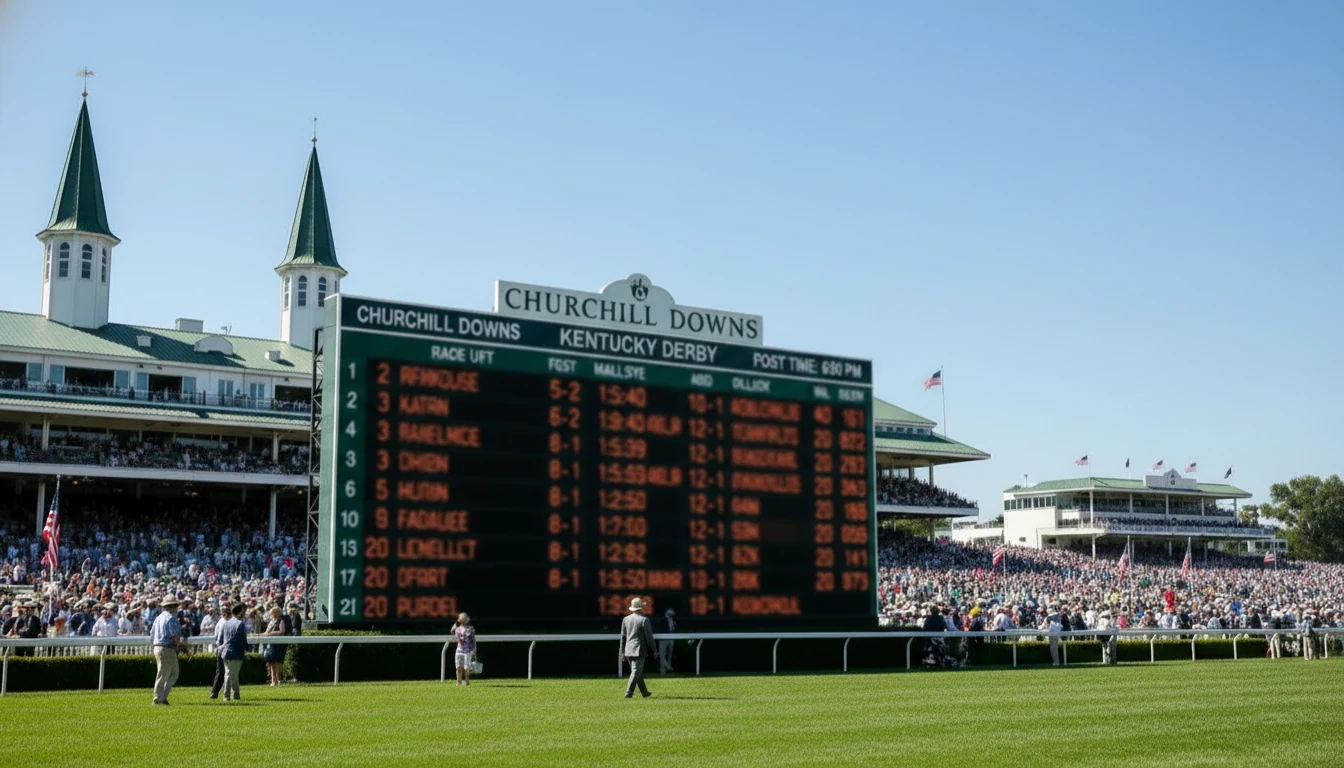
Kentucky Derby odds function through the same parimutuel system governing everyday racing, but the scale differs dramatically. Derby betting pools routinely exceed one hundred million dollars across all wager types. This massive liquidity means odds reflect genuine market consensus rather than the quirks of thin pools found at smaller tracks.
Morning Line vs. Post-Time Odds
The official Kentucky Derby morning line appears when entries are finalized, typically the Monday before the race. Churchill Downs’ track handicapper assesses each horse and predicts where the betting public will ultimately send the odds. This morning line serves as a starting reference point but rarely matches actual post-time prices.
Morning line odds for Derby favorites typically range from 3/1 to 8/1, reflecting the competitive nature of most fields. Prohibitive favorites below 2/1 rarely appear because the race’s inherent difficulty makes oddsmakers reluctant to install any horse as overwhelming choice. When morning lines do show short-priced favorites, the market often drifts them higher as bettors recognize the uncertainty.
The gap between morning line and post-time odds reveals where money flows during betting. A horse at 12/1 on the morning line going off at 6/1 has attracted significant support — perhaps sharp money, perhaps trainer connections loading up, perhaps public enthusiasm for a compelling story. Conversely, horses drifting from 8/1 to 15/1 face market skepticism worth noting.
Historical Odds Patterns
Derby favorites have a complicated track record. Post-time favorites win approximately thirty percent of the time, slightly below the favorite win rate in typical races. This underperformance reflects the race’s difficulty — twenty-horse fields at a mile and a quarter test even the most talented runners in ways that shorter fields at shorter distances do not.
Longshot winners appear with surprising regularity. Horses at 10/1 or higher win roughly forty percent of Kentucky Derbies. Several recent winners came from double-digit odds, rewarding bettors who looked past the obvious choices. This pattern makes the Derby particularly fertile ground for exotic wagers where including longer-priced horses can produce substantial payouts.
The betting public tends to overvalue certain trainer and jockey combinations while undervaluing others. Trainers with Derby pedigrees attract support regardless of their current runner’s credentials. Meanwhile, first-time Derby trainers with legitimate horses sometimes offer overlay prices because casual bettors default to familiar names.
Post position draws influence both odds and actual performance. Inside posts historically underperform, though recent track configurations have moderated this effect. Extreme outside posts force horses to cover extra ground or use energy early to establish position. Posts in the middle third typically produce the best results relative to morning line expectations.
Types of Bets for the Kentucky Derby
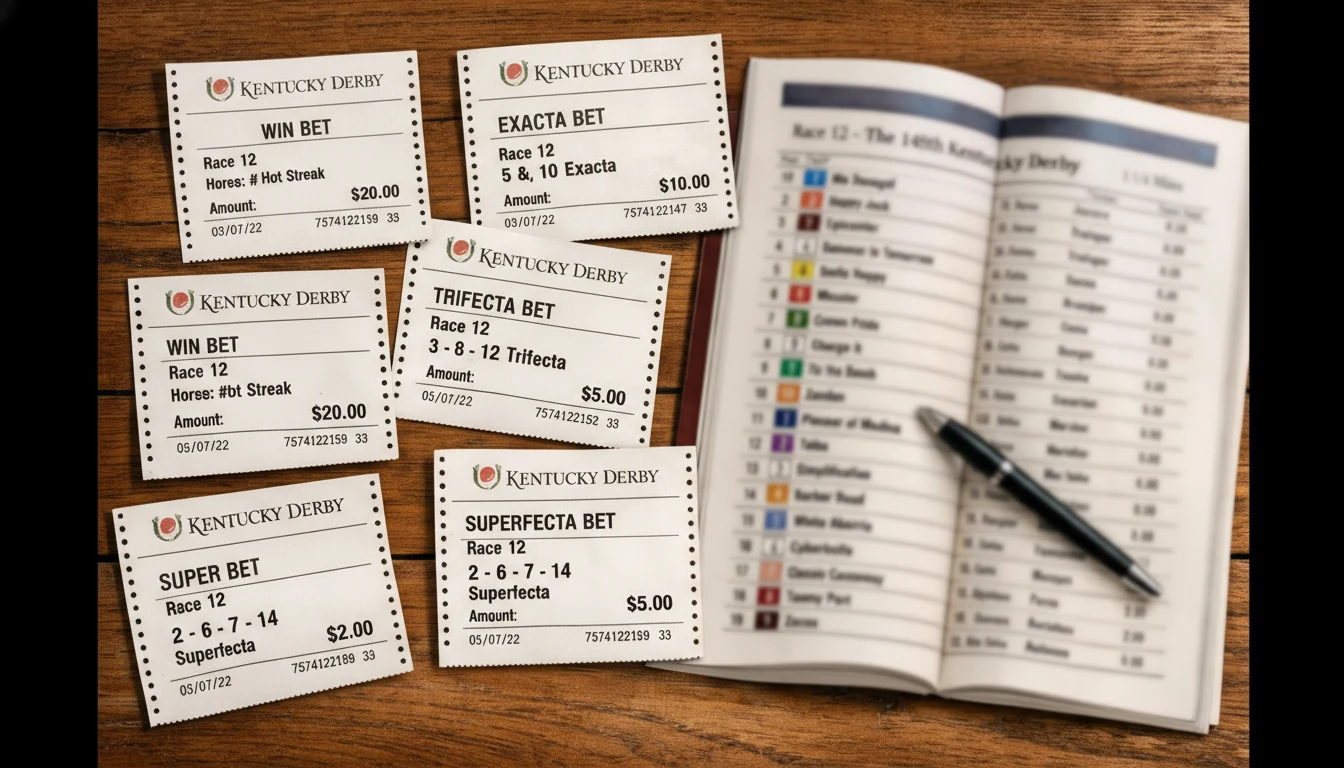
The Kentucky Derby offers every standard bet type plus some unique wagering opportunities available only around major racing events. Understanding your options allows strategic allocation of your betting budget across wagers matching your handicapping confidence and risk tolerance.
Win, Place, and Show
Straight bets work identically to everyday racing. Win bets require your horse to finish first. Place bets cash if your horse finishes first or second. Show bets pay for top-three finishes. The massive Derby pools produce accurate odds that efficiently reflect each horse’s chances, making standout value harder to find in straight pools than in thinner everyday markets.
Show betting on Derby favorites has historically produced modest but consistent returns. The twenty-horse field means even well-regarded horses occasionally fail to hit the board, but favorites and second choices show at high enough rates that conservative bettors find acceptable risk-reward ratios. The tradeoff involves minimal payouts — show bets on short-priced horses sometimes return barely more than the original wager.
Exacta and Trifecta Opportunities
Exotic wagers shine in the Derby environment. Twenty horses create enormous combination possibilities that casual bettors cannot efficiently cover. A straight exacta has 380 possible outcomes. Trifectas involve 6,840 permutations. This mathematical complexity means even modestly informed handicapping can identify overlooked combinations.
Historical Derby exactas routinely pay several hundred dollars even when including favorites. Trifectas frequently reach four figures, and those involving longer-priced horses occasionally produce five-figure returns. The key involves constructing tickets that capture probable outcomes without requiring such large investments that profits evaporate even when correct.
Boxing multiple horses in exactas and trifectas becomes expensive quickly given field size. Key horse strategies prove more efficient — designating one or two horses as required in specific positions while using others more flexibly. A ticket keying your top selection to win with six horses underneath for second covers just six combinations compared to forty-two for a full seven-horse exacta box.
Superfecta: The Derby’s Signature Bet
Superfecta wagering — picking the first four finishers in exact order — reaches its apex at the Kentucky Derby. The potential combinations boggle calculation: 116,280 possible outcomes in a twenty-horse field. Yet ten-cent minimum wagers make participation accessible, and payouts can reach life-changing levels when longshots fill superfecta positions.
The 2005 Kentucky Derby superfecta paid $864,253 for a one-dollar ticket when 50/1 Giacomo led home three other double-digit longshots. While such extremes remain rare, five-figure superfecta returns happen regularly enough to justify thoughtful participation. Building superfecta tickets requires accepting that you cannot cover every possibility — strategic selection of which horses can realistically fill which positions matters more than raw combination count.
Derby Future Wagers
Churchill Downs offers future wagering pools opening months before the race. These pools allow betting on Derby contenders before the field is finalized, often at odds significantly higher than post-time prices. A horse that opens at 30/1 in November futures might go off at 8/1 on race day if their prep season goes well.
Future pools carry substantial takeout and close your money into positions long before race day. Horses get injured, skip the Derby, or regress between your wager and the race itself. The tradeoff involves capturing value on horses before the market recognizes their potential. Sophisticated Derby bettors monitor future pools throughout the winter and spring, striking when prices exceed their assessment of true chances.
How to Handicap the Kentucky Derby
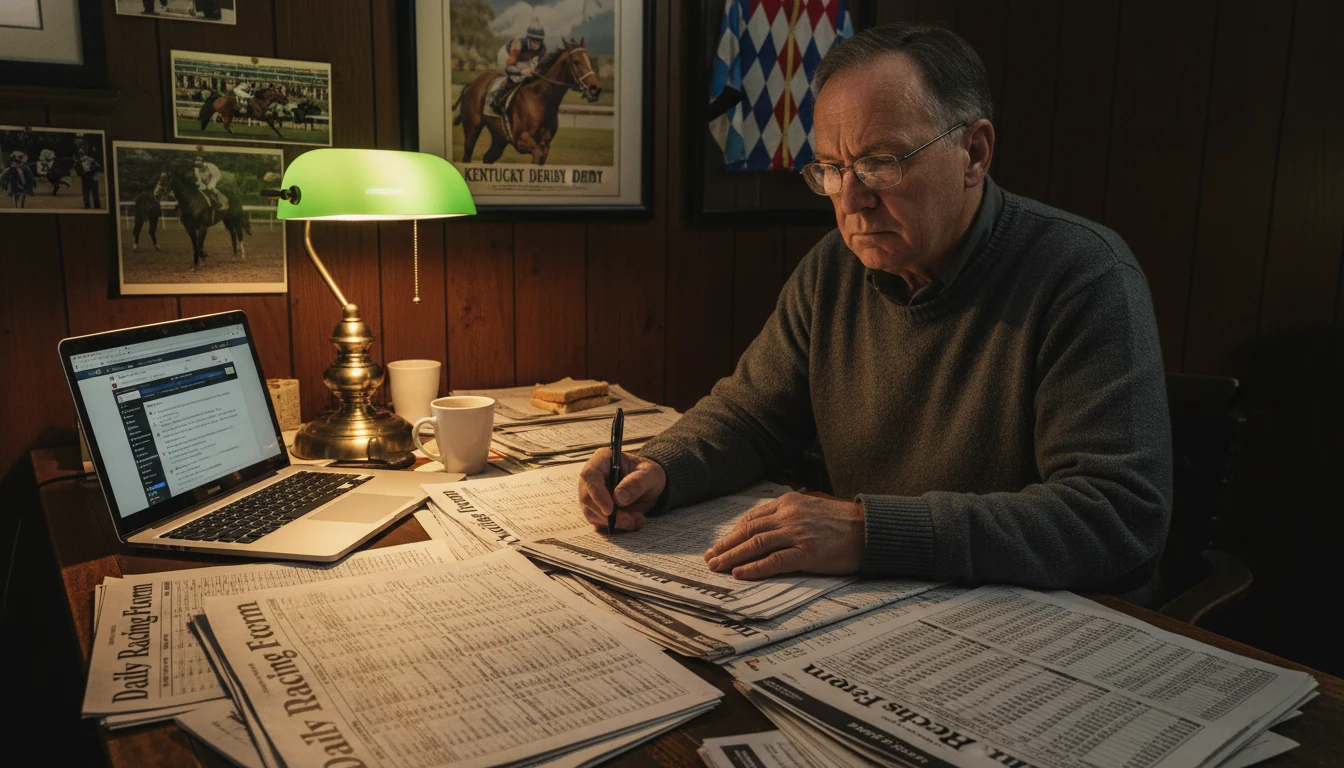
Derby handicapping requires adapting standard approaches to the race’s unique circumstances. Three-year-olds in May remain developing athletes whose trajectories can shift dramatically between prep races and the Derby itself. Methods that work for established older horses need modification for this younger, less proven population.
Prep Race Analysis
The Kentucky Derby prep season provides the primary data for handicapping. Key prep races include the Santa Anita Derby, Wood Memorial, Blue Grass Stakes, Arkansas Derby, and Florida Derby. Performance in these races reveals current form, but context matters enormously — not all preps are created equal, and not all prep performances translate to Derby success.
Evaluating prep races requires looking beyond final results. How did the horse achieve that result? A three-length win earned while rating kindly off a contested pace means something different than a narrow victory achieved through all-out effort from the gate. Horses that won impressively while seemingly having more to give project better than those who emptied the tank for narrow margins.
The spacing between final prep and Derby matters. Some trainers prefer giving their horses five or six weeks between races. Others run closer to Derby day. Neither approach consistently outperforms the other, but horses attempting the Derby off extended layoffs or unusually compressed schedules deserve scrutiny. Individual training patterns and historical success rates with specific approaches provide guidance.
Speed Figures for Three-Year-Olds
Speed figures offer numerical comparison across different prep races at different tracks. A horse earning a 100 Beyer in the Santa Anita Derby can be compared directly to one earning 98 in the Blue Grass. These comparisons help identify which horses have demonstrated the raw ability to compete at Derby level.
Three-year-old speed figures require cautious interpretation. Young horses improve rapidly — a figure earned two months ago may understate current ability. Some trainers deliberately train horses below peak fitness for preps, planning improvement cycles that peak on Derby day. Others run preps as near-maximum efforts. Distinguishing between these patterns helps project which figures represent ceilings versus floors.
The best Derby horses typically show figure progression through their prep seasons. Improving figures suggest a horse moving in the right direction at the right time. Declining figures, or figures that peaked earlier in the prep season, raise questions about whether that horse can reproduce their best on the first Saturday in May.
Churchill Downs Trainer Records
Certain trainers demonstrate sustained Derby success across multiple runners. Their familiarity with Churchill Downs, the Derby day atmosphere, and the specific demands of the race itself provides edges that first-time Derby trainers cannot match. Examining trainer records at the track — not just in the Derby specifically, but throughout Churchill Downs meets — reveals those with genuine local expertise.
Successful Derby trainers often share methodological characteristics. Patience in development, careful race spacing, and willingness to bypass preps that do not suit their horse’s style appear repeatedly among winning conditioners. Trainers who force horses into suboptimal prep schedules or rush development to make the Derby deadline tend to underperform.
Jockey Experience and Post Positions
Derby experience matters for jockeys navigating twenty-horse fields. Veterans know when to advance position, when to wait for running room, and how to handle the sensory overload of 150,000 screaming fans. Riders making their first Derby starts sometimes commit tactical errors that experience would prevent.
Post position statistics at Churchill Downs have evolved with track configuration changes. Current data suggests middle posts between positions five and fifteen perform best on average. Extreme inside posts face traffic trouble, while far outside posts require early expenditure to avoid racing widest throughout. Weight your handicapping toward horses with favorable draws while recognizing that talented horses overcome post disadvantages regularly.
Kentucky Derby Betting Strategies
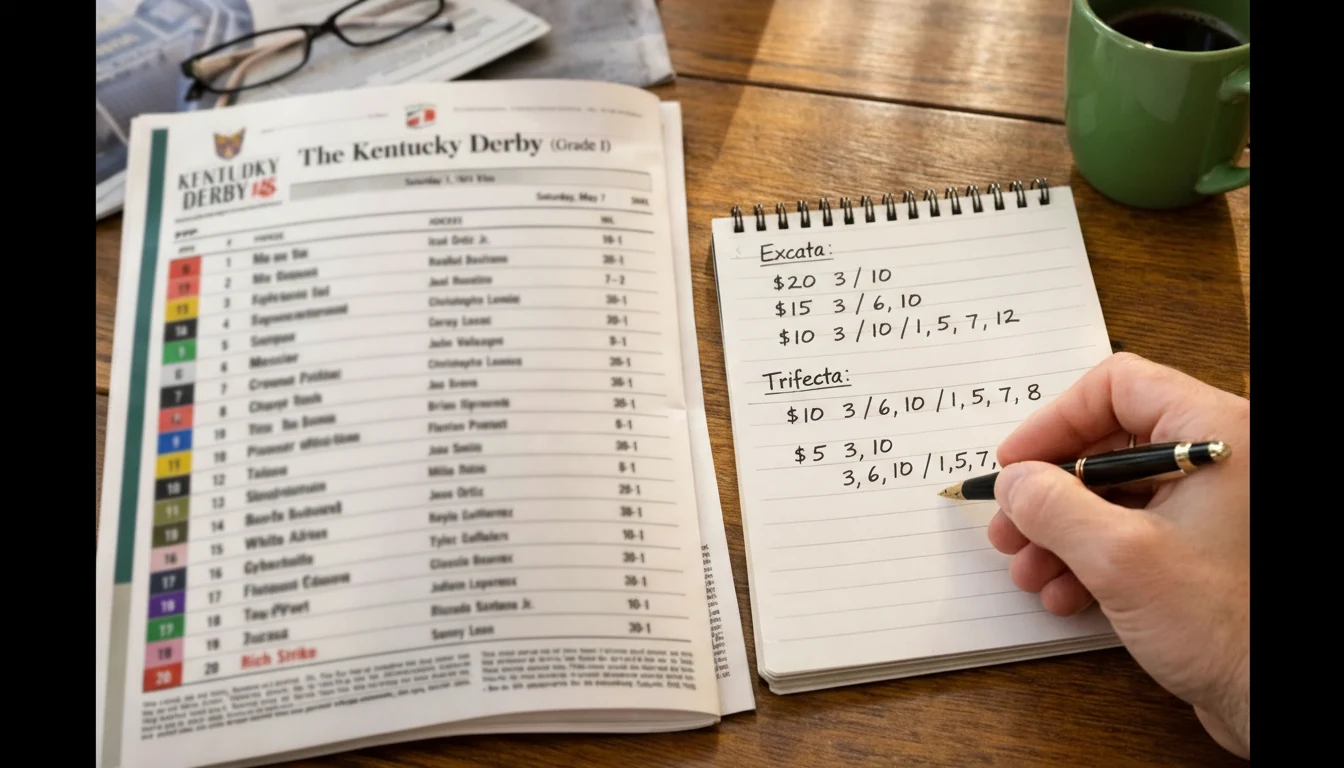
The Derby’s unique characteristics demand strategic adjustments. Approaches that work for everyday racing need modification to account for field size, public money influence, and the race’s inherent unpredictability. These strategies help you capitalize on Derby-specific opportunities.
Embracing the Chaos
The Kentucky Derby punishes overconfidence. Twenty young horses, many running the distance for the first time against this level of competition, produce outcomes that even expert handicappers fail to predict. Accepting this uncertainty shapes smarter wagering strategies than pretending you can identify the winner with high confidence.
Spreading across multiple contenders in exotic wagers acknowledges reality rather than representing weakness. Building trifecta and superfecta tickets with six, eight, or even ten horses provides coverage for the variability that defines the race. The cost of broad tickets is offset by payout potential when including horses that less sophisticated bettors ignore.
This approach does not mean betting randomly. You still apply handicapping analysis to eliminate horses with clear deficiencies and identify those with genuine chances. The difference is accepting that your final group contains several plausible winners rather than forcing yourself to choose just one.
Finding Value Against Public Money
Derby day attracts billions of dollars from casual bettors worldwide. These participants often bet based on horse names, jockey fame, trainer reputation, or television commentary rather than thorough handicapping. Their money creates distortions that informed bettors can exploit.
Horses with appealing names or connections to popular culture attract disproportionate action. Their odds compress below fair value because casual bettors remember the name while skipping past less memorable alternatives. Meanwhile, horses with forgettable names and lower-profile connections often offer overlay prices despite legitimate credentials.
Trainer and jockey combinations with Derby history draw support regardless of current runner quality. A famous trainer’s third or fourth string Derby entrant might attract more betting action than a serious contender from a less celebrated barn. Identifying these reputation-driven distortions helps you find horses whose odds exceed their actual chances.
Building Cost-Effective Exotic Tickets
Efficient ticket construction determines whether Derby exotic plays produce profit or merely expensive entertainment. The goal is maximizing coverage of likely outcomes while minimizing combinations that waste money on implausible finishes.
Start by identifying horses you believe cannot win and eliminating them from top positions in your tickets. A horse you assess as having no realistic win chance might still merit inclusion for minor placings in superfectas, but using them in exacta and trifecta key positions wastes resources.
Separate your contenders into tiers. Your top tier includes horses you consider most likely to win. Second tier contains horses with legitimate chances but lower probability. Third tier includes longshots worth using underneath in exotics. Structure tickets that require top-tier horses in primary positions while spreading lower tiers across secondary positions.
Consider multiple ticket structures rather than single massive combinations. One ticket might key your top choice to win with eight horses underneath. A second ticket keys your second choice similarly. A third spreads your top three with each other for exacta positions. This diversified approach provides multiple paths to cashing rather than depending entirely on one precise prediction.
Budget allocation across bet types reflects confidence levels. If your handicapping identifies a strong win contender, allocate meaningful dollars to win and exacta positions. If the race looks wide open, shift budget toward trifectas and superfectas where spreading across many horses provides value. Match your wagering structure to your genuine assessment rather than forcing every Derby into the same betting template.
The Triple Crown Path
The Kentucky Derby represents one-third of thoroughbred racing’s greatest challenge. Winners who emerge from Churchill Downs face two more tests over the following five weeks: the Preakness Stakes and Belmont Stakes. Understanding this path helps bettors evaluate Derby contenders with Triple Crown potential and positions you for wagering opportunities beyond the first Saturday in May.
Preakness Stakes Overview
The Preakness Stakes runs two weeks after the Kentucky Derby at Pimlico Race Course in Baltimore. The shorter turnaround tests Derby participants’ recovery ability and their connections’ willingness to run back quickly. Some Derby horses skip the Preakness, while others arrive as heavy favorites seeking the second jewel.
At a mile and three-sixteenths, the Preakness runs slightly shorter than the Derby’s mile and a quarter. The tighter Pimlico track favors tactical speed more than Churchill Downs’ sweeping turns. Horses who ran closing styles in the Derby sometimes find the Preakness distance and track configuration less suitable.
Preakness fields typically number nine to fourteen horses — significantly smaller than Derby fields. This reduction comes partly from attrition (Derby runners needing rest) and partly from fresh shooters entering specifically for the Preakness rather than contesting the Derby. Evaluating these new entrants requires different data sources than Derby handicapping.
Betting dynamics shift for the Preakness. The Derby winner attracts heavy favorite support, sometimes at odds that offer minimal value. Meanwhile, horses that ran well in the Derby without winning may offer overlay prices if the public focuses exclusively on the returning champion. Identifying these value spots requires quick handicapping turnaround between races.
Belmont Stakes Challenges
The Belmont Stakes presents the ultimate test three weeks after the Preakness. At a mile and a half around Belmont Park’s expansive oval, the race demands sustained stamina that many American thoroughbreds lack. This grueling distance explains why Triple Crown winners appear so rarely — only thirteen horses have swept all three races in nearly 150 years of trying.
Horses attempting the Belmont after running both the Derby and Preakness face accumulated fatigue. Three demanding races in five weeks strains even the most talented three-year-olds. Some Derby winners skip the Preakness specifically to arrive fresher for the Belmont’s stamina test. This strategic decision affects betting dynamics across all three races.
The Belmont attracts horses specifically suited to its distance demands. European-bred horses with stamina pedigrees sometimes enter seeking the Belmont’s prestige. Fresh horses that skipped earlier Triple Crown legs may have tactical advantages over tired Derby and Preakness veterans. Handicapping the Belmont requires assessing fatigue alongside traditional form analysis.
Historical Triple Crown Context
Triple Crown droughts lasting decades demonstrate the achievement’s difficulty. The thirty-seven-year gap between Affirmed in 1978 and American Pharoah in 2015 seemed interminable to racing fans. Since then, Justify in 2018 provided another sweep, suggesting modern training and veterinary advances may make Triple Crowns slightly more achievable — though still exceptionally rare.
Betting Triple Crown contenders requires balancing their demonstrated ability against the physical demands ahead. A dominant Derby winner might justify favorite status in the Preakness while offering poor value for actual returns. That same horse entering the Belmont off two demanding races may be vulnerable despite their pedigree. Evaluating value independently at each leg rather than simply backing the Triple Crown contender throughout produces better long-term results.
Where to Bet on the Kentucky Derby
Every major ADW platform offers Kentucky Derby wagering with full access to all bet types. TwinSpires holds particular relevance as the official betting partner of Churchill Downs, often featuring Derby-specific promotions and enhanced content. TVG provides extensive pre-race coverage through its television network. NYRA Bets and AmWager offer competitive alternatives with their standard features applicable to Derby wagering.
Derby betting pools remain open longer than typical races, with wagering available days before the actual race. This extended window allows bettors to monitor odds movements and time their wagers strategically. Some bettors place win and exacta bets early to capture favorable prices, while others wait until post time to assess final market sentiment.
On-track betting at Churchill Downs provides the ultimate Derby experience for those attending in person. The atmosphere cannot be replicated remotely, though betting logistics amid 150,000 fans present challenges. Mobile betting through ADW apps while physically at the track offers the best of both worlds — Derby day atmosphere with convenient wagering access.
Conclusion
The Kentucky Derby rewards preparation and punishes overconfidence in equal measure. Its twenty-horse fields create complexity that careful handicapping can navigate, while the influx of casual betting money produces value opportunities for informed bettors. Understanding Derby-specific odds patterns, leveraging the full range of available wagers, and applying handicapping frameworks suited to three-year-old racing positions you for success.
Approach the Derby with appropriate humility about prediction difficulty while maintaining confidence in your analytical framework. Build betting strategies that embrace uncertainty through diversified exotic tickets rather than concentrated win bets. Look for value where public money distorts odds away from fair prices. Whether the first Saturday in May produces a favorite’s victory or a longshot upset, thoughtful preparation gives you the best chance of celebrating alongside the winner.
Recommend
Published by the horseracingb team.
